Habits / why-you-reach-for-your-phone-first-thing-in-the-morning
Why Your Phone Is the First Thing You Reach For in the Morning (And How to Stop)
Last year, a friend asked me a simple question that I couldn't stop thinking about: "What's the first thing you do every morning?"
I wanted to say something impressive. Meditate. Journal. Go for a run. But the honest answer was: I check my phone. Before my feet hit the floor, before I say good morning to anyone, before I even fully open my eyes, I'm scrolling.
Key Takeaways
- 84.6% of Americans check their phone within 10 minutes of waking, according to a Q4 2025 Reviews.org survey of about 1,000 US adults.
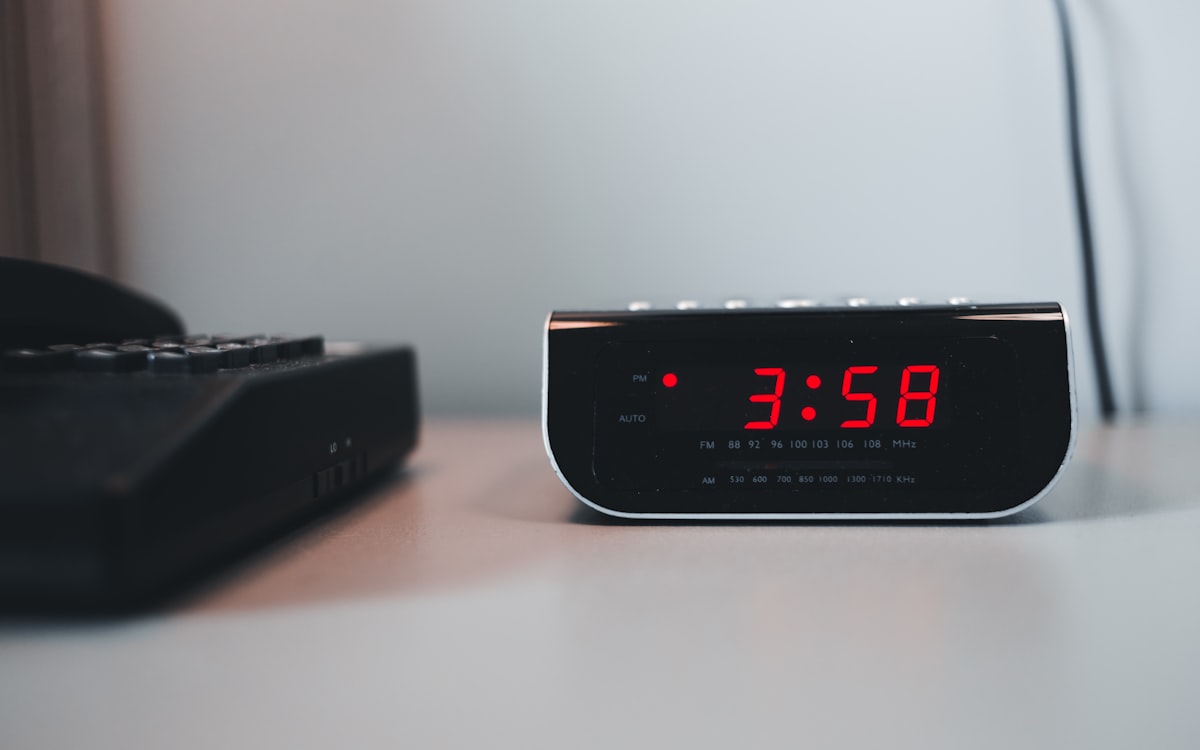
- The strongest fix is environmental, not motivational: charge the phone in another room and buy a cheap alarm clock.
- Expect roughly three uncomfortable days. In my own two-week test, day four was the turn.
- A replacement ritual matters more than the rule itself. Removing the phone without putting something in its place tends not to hold.
- You cannot fix the morning habit while still falling asleep with the phone. The two are one habit with two ends.
Almost Everyone Does This
I assumed I was unusually bad. I wasn't. That Reviews.org survey found 84.6% of respondents check their phone within ten minutes of waking. Not the first hour. The first ten minutes.
The same survey found 49.6% sleep with their phones and 76.3% feel uneasy leaving the house without one. The morning check isn't a personal discipline failure. It's the default behavior of a large majority of adults, which is worth knowing before you start blaming your own willpower.
Why the First Few Minutes Are Different
As you wake, brain activity shifts from the slower rhythms associated with drowsiness toward the faster ones associated with alert, active thinking. That's a simplification of a messier process, but the direction is right.
Here's the practical consequence. During that transition you haven't yet set your own agenda for the day, so whatever arrives first tends to become the agenda. Check email at minute two and your boss's request becomes your first thought. Open a feed and a stranger's argument becomes your first emotion.
I want to be careful not to oversell the neuroscience, because a lot of writing on this topic does. There's no good evidence that a morning scroll causes lasting brain changes. The honest version of the claim is simpler and still worth acting on: you have a brief window each day where you get to choose your first input, and most of us hand it away without noticing.
What Happened When I Stopped
For two weeks I kept my phone in the kitchen overnight and didn't touch it until I'd been awake at least 30 minutes.
The first three days were genuinely uncomfortable. I kept reaching for the nightstand and finding nothing there. I didn't know what to do with myself, which was itself informative.
By day four something shifted. I started actually noticing my mornings. The light through the window. Birds outside. How my body felt. That sounds cheesy written down. But when you've spent years waking up inside a screen, waking up inside your actual life is a noticeable difference.
The effect I didn't anticipate was on the rest of the day. Mornings I started on my own terms, I was measurably harder to derail later. Mornings I broke the rule, I spent the day reacting. That's one person's observation over two weeks, not a study, but it was consistent enough that I kept the habit.
The Five Changes That Made It Stick
1. Get a real alarm clock
This removes the single biggest excuse for keeping the phone within arm's reach. A perfectly good one costs under ten dollars. Everything else on this list is easier once the phone is physically out of the room, which is why it's first.
2. Set a phone-free window, and start small
Start with 15 minutes and work up. I settled on 45, which is enough to shower, make coffee, eat, and think about the day before the outside world arrives.
Don't start at 45. People who try to jump straight to an hour usually quit in week one.
3. Prepare the night before
Decide what you'll wear, what you'll eat, and what your first task is. This kills the most reasonable-sounding excuse of all, which is "but I need my phone to check my schedule."
4. Find a replacement ritual
Mine is a pour-over coffee. It takes about five minutes and gives my hands something to do. Other people journal, stretch, or sit outside.
The specifics genuinely don't matter. What matters is that the slot is filled. An empty slot gets filled by the phone eventually, because that's what the phone is for.
5. Fix the other end of the habit
The morning is hard to change while you're still falling asleep with the phone in your hand. I started reading physical books in bed instead, and both ends got easier at once.
There's a physiological argument here too. Research in Brain Communications found evening smartphone use suppresses melatonin, with a stronger effect when the blue-light filter is off. More on that in how your phone is ruining your sleep.
What to Expect
The first week is the hardest, and it helps to know the shape of it in advance:
- Days 1 to 3: reaching for a phone that isn't there, mild irritation, a sense of missing something.
- Day 4 to the end of week one: the reaching stops. Mornings start feeling longer.
- Week two onward: the calm becomes the new normal, and breaking the rule feels bad enough to be self-correcting.
If you want to fold this into a broader reset, it's day three of our 7-day phone detox, and it was the highest-return change in my 30-day screen time experiment.
The world managed without your attention for the eight hours you were asleep. It can wait another 30 minutes.