Science / how-your-phone-is-ruining-your-sleep
Your Phone Is Ruining Your Sleep (And It's Not Just the Blue Light)
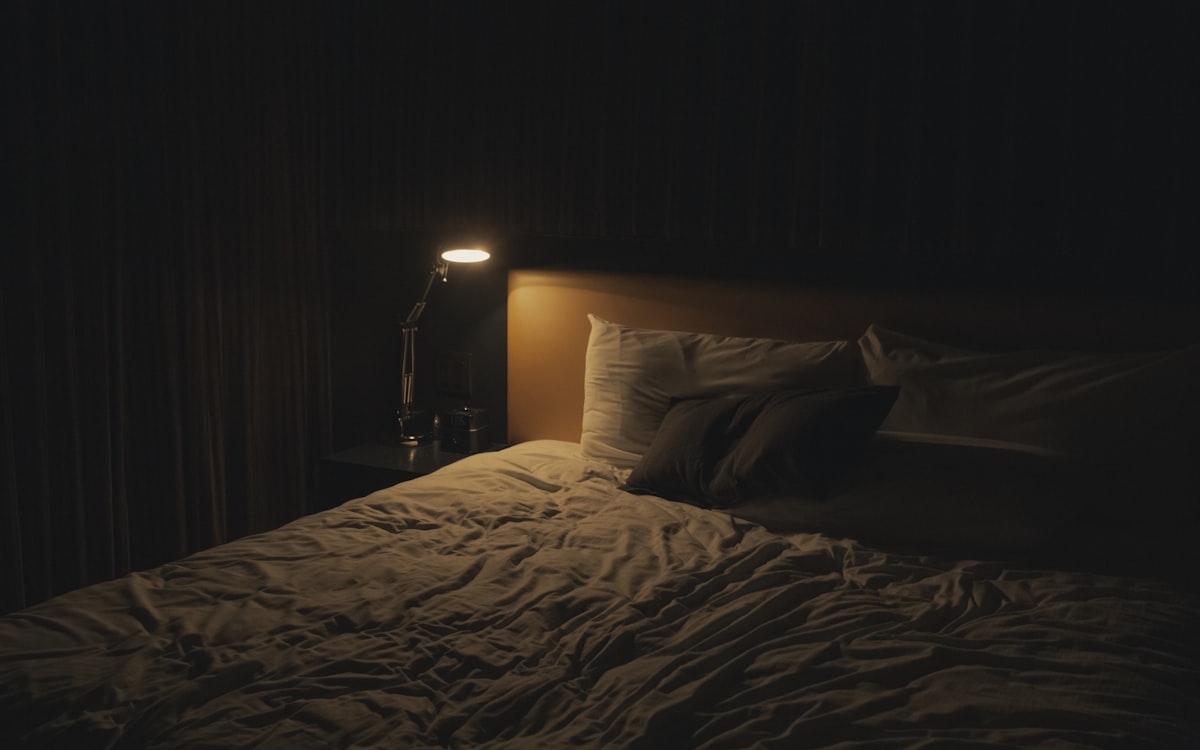
Everyone knows looking at your phone before bed is bad for sleep, and most people think they know why: blue light suppresses melatonin. So they switch on Night Shift, install a filter, and consider it handled.
It isn't. Blue light is real, and it's the least important reason your phone is wrecking your sleep. The bigger problems are psychological, and no filter touches them.
Key Takeaways
- Blue light does suppress melatonin, but filters address only one of four mechanisms at work.
- Cognitive arousal, emotional activation, and conditioned anticipation do more damage and can't be filtered.
- Moving my phone to the kitchen improved my sleep by about 45 minutes on the first night.
- After a month: falling asleep in 15 minutes instead of 45 to 60, and 7.2 hours of sleep instead of 5.5.
- Same bedtime, same wake time. The change was what happened in between.
What Blue Light Actually Does
Let's give the standard explanation its due, because it isn't wrong.
Research published in Brain Communications found that evening smartphone use suppressed melatonin, with a notably stronger effect when the blue-light filter was off. Evening blue light exposure delays circadian phase and lengthens the time it takes to fall asleep.
But note what that finding does and doesn't license. It says light affects melatonin. It doesn't say light is the main reason you're lying awake at midnight. Evidence that blue-light-blocking glasses actually improve sleep is thin: a 2025 systematic review of blue-light blocking glasses found only a handful of small trials, with protocols that varied a lot between them, and none of the pooled sleep outcomes reached statistical significance.
If filters solved this, Night Shift would have fixed everyone's sleep by now. It didn't, and the reason is that three other mechanisms are doing more work.
The Three Things a Filter Can't Fix
1. Cognitive arousal
Your brain is processing a stream of novel stimuli: images, text, reactions. Each item triggers micro-decisions. Keep scrolling? React? Save this? Reply?
Your brain is actively working. That's the opposite of the wind-down state sleep requires, and it's true whether the screen is warm orange or cold blue.
A nationally representative study of US young adults published in SLEEP found bedtime social media use associated with disturbed sleep. What's telling is that disruption tracks with what you're doing on the screen, not just the light coming off it.
2. Emotional activation
You see a news story that makes you angry. A post that makes you envious. A thread that stresses you out. A message you now need to answer.
Each engages your sympathetic nervous system. Even mild activation makes falling asleep harder, because your body has concluded it should stay alert.
3. Anticipatory anxiety
This is the one almost nobody talks about, and I think it's the most important.
Checking your phone right before sleep trains your brain to expect stimulation at bedtime. Over time it starts anticipating it. You feel restless without it. You can't settle without one last check.
That's a conditioned response, and every night you follow the pattern you strengthen it. It's also why people who switch on a blue light filter and change nothing else see so little benefit. The conditioning is untouched.
Where I Was
I'd get into bed at 10:30, "quickly" check my phone, and look up at midnight. Then I'd lie there unable to sleep because my brain was still processing everything I'd seen.
I was getting about 5.5 hours of actual sleep while spending 8 hours in bed.
What I Changed, In Order of Impact
The phone goes in the kitchen at 9 PM
Not on the nightstand. Not face-down on the dresser. In the kitchen, on a charger, where retrieving it means getting out of bed and walking down a hallway.
This single change improved my sleep by roughly 45 minutes on the first night. It works because it's the only intervention that addresses all four mechanisms at once. No light, no content, no emotional activation, and eventually no conditioned expectation.
Reviews.org found 49.6% of Americans sleep with their phones, so if this sounds extreme, it's only extreme relative to a very widespread habit.
A six-dollar alarm clock
"But I need my phone for the alarm" is the most common objection and the most easily solved. Six dollars. Done.
Reading replaced scrolling
A physical book. Something engaging but not gripping, so no page-turning thrillers right before bed.
Twenty minutes of reading made my eyes heavy in a way that two hours of scrolling never did.
No news after 7 PM
Nothing that happens between 7 PM and 7 AM requires my immediate attention. If something genuinely catastrophic occurs, someone will call.
Results After One Month
- Falling asleep in about 15 minutes instead of 45 to 60.
- Waking once in the night instead of three or four times.
- Total sleep from 5.5 hours to 7.2.
- Feeling rested in the morning for the first time in years.
Same bedtime, same wake time. I was simply sleeping instead of scrolling and then tossing.
The Takeaway
Keep the blue light filter. It's free and it probably helps a little.
Just don't mistake it for a solution. The content is the problem. The stimulation is the problem. The conditioning is the problem. Filters address none of those, and distance addresses all of them.
If the mornings are also rough, the two ends are one habit: why you reach for your phone first thing covers the other half.
sources for this page
- Effects of evening smartphone use on sleep and declarative memory consolidation in male adolescents and young adultsBrain Communications · 2024
- Efficacy of blue-light blocking glasses on actigraphic sleep outcomes: a systematic review and meta-analysis of randomized controlled crossover trialsFrontiers in Neurology · 2025 · only a handful of small trials, with protocols that varied considerably; none of the pooled sleep outcomes reached statistical significance (statistical heterogeneity between trials was actually low, I²=0%)
- Social Media Use Before Bed and Sleep Disturbance Among Young Adults in the United States: A Nationally Representative StudySLEEP · 2017