Science / how-social-media-destroys-deep-thinking
How Social Media Is Quietly Destroying Your Ability to Think Deeply
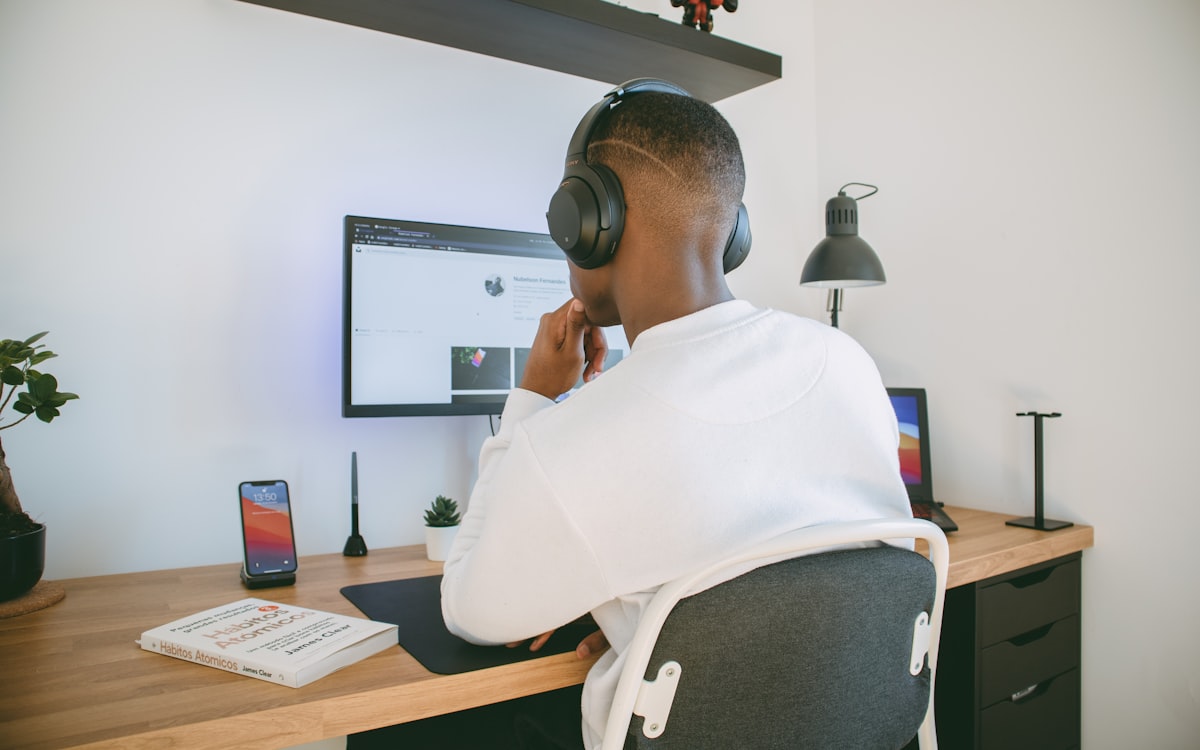
I used to be able to think. Really think: hold a complex idea in my head, turn it over, connect it to other ideas, and arrive at something new. I wrote essays in college that required keeping four or five threads going at once.
Somewhere in the last decade I lost that. I didn't notice it happening, which is the part that unsettles me. It was like slowly going nearsighted. You don't realize the world is blurry until someone hands you glasses.
Key Takeaways
- Average sustained attention on a screen fell from about 2.5 minutes in 2004 to 47 seconds by 2016 in Gloria Mark's research.
- I lasted 4 minutes and 12 seconds in my own uninterrupted focus test before reaching for my phone.
- Most evidence here is correlational. It cannot tell you whether heavy multitasking erodes attention or distracted people multitask more.
- The most effective change was the least intuitive: stop filling transitions with content.
- Fifteen minutes a day of undirected thinking produced results within three weeks.
The Moment I Noticed
I tried to write a long email to a friend going through something difficult. I wanted to say something thoughtful, something that showed I'd actually considered their situation.
I couldn't hold the thought. Every sentence, my mind flitted away: to a notification I might have, to a video I'd seen earlier, to nothing at all. After 20 minutes I sent three lines that said essentially nothing.
That was enough to make me start reading about what was happening.
What the Evidence Does and Doesn't Show
Nicholas Carr's argument in "The Shallows" is that brains restructure around how they're used. Spend hours a day on short, rapid-fire content and you get efficient at shallow processing: quickly evaluating and discarding, switching tasks, scanning.
The measured version comes from Gloria Mark at UC Irvine, who has tracked attention on screens for two decades. Average time on a screen before switching was about 2.5 minutes in 2004, 75 seconds in 2012, and 47 seconds by 2016, with a median of 40, as she has described in interviews about the work. Her research also found that returning to a task after an interruption takes roughly 23 minutes on average, and that people interrupt themselves about as often as others interrupt them.
Now the honest caveats, because this topic attracts more certainty than the evidence supports.
Heavy media multitasking has been linked in a number of studies to weaker performance on working memory and attention tasks. That work is largely correlational and cannot tell you which direction the arrow points. People with shorter attention spans may simply be drawn to multitasking.
The famous brain drain study, which found reduced cognitive capacity when a phone was merely present, failed to replicate in 2022. I've cited that finding confidently in the past and shouldn't have.
So the strong claim, that phones are measurably damaging your cognition, is not established. The weaker claim is: if your default attention unit has become 47 seconds, you have practiced one mode of thinking intensively and another barely at all. That's enough to act on, and it doesn't require anyone's brain to be broken.
I Tested Myself
I set a timer and tried to focus on one task with no digital interruption. No phone, no tabs, no music. Me and a notebook.
Four minutes and twelve seconds.
Try it before reading further. The number is more persuasive than any study, and it's yours.
What I Changed
Fifteen minutes a day of deep sits
No phone, no computer, not even a book. Just sitting with a single question or problem and thinking about it.
The first few days were excruciating and my mind bounced like a pinball. By week two I started getting somewhere. By week three I had connections I wouldn't have made in a month of scrolling.
This is the highest-leverage item on the list and the one people skip, because it looks like doing nothing.
Physical books, twenty pages a day
Printed books, no hyperlinks, no notifications.
It was hard at first. My eyes kept wanting to jump ahead, scan for key points, skim. Eventually I slowed down and started rereading sentences because they were good rather than because I'd lost the thread. The longer version of this process is in how to read books again.
Stop consuming content during transitions
This was the simplest change and by some distance the most effective.
No podcast on the walk to work. No scrolling in the elevator. No news while eating.
Those micro-moments of boredom appear to be when a lot of useful background processing happens: consolidating memory, making connections, generating ideas. We've plugged every gap with content and then wonder why nothing surfaces. There's a fuller case in the art of being bored.
Worth naming the trap here, since I fell into it. Podcasts and audiobooks feel virtuous, which makes them harder to give up than social media. But a gap filled with high-quality content is still a filled gap.
Where This Leaves You
Your brain is not broken. It adapted, and it can adapt back. What it needs is unfilled space, which is the one thing a phone is designed never to leave you.
Start with the transitions. It costs nothing, requires no app, and you'll notice something within a week.
sources for this page
- Why our attention spans are shrinking, with Gloria Mark, PhDAmerican Psychological Association · 2023
- Brain Drain: The Mere Presence of One's Own Smartphone Reduces Available Cognitive CapacityJournal of the Association for Consumer Research · 2017 · a 2022 replication using the same tasks did not reproduce the effect
- Does a smartphone on the desk drain our brain? No evidence of cognitive costs due to smartphone presence in a short-term and prospective memory taskActa Psychologica · 2022 · ran the same tasks and conditions as the 2017 original and did not reproduce the effect