Science / the-art-of-being-bored-and-why-ideas-come-when-you-stop-scrolling
The Art of Being Bored: Why Your Best Ideas Come When You Stop Scrolling
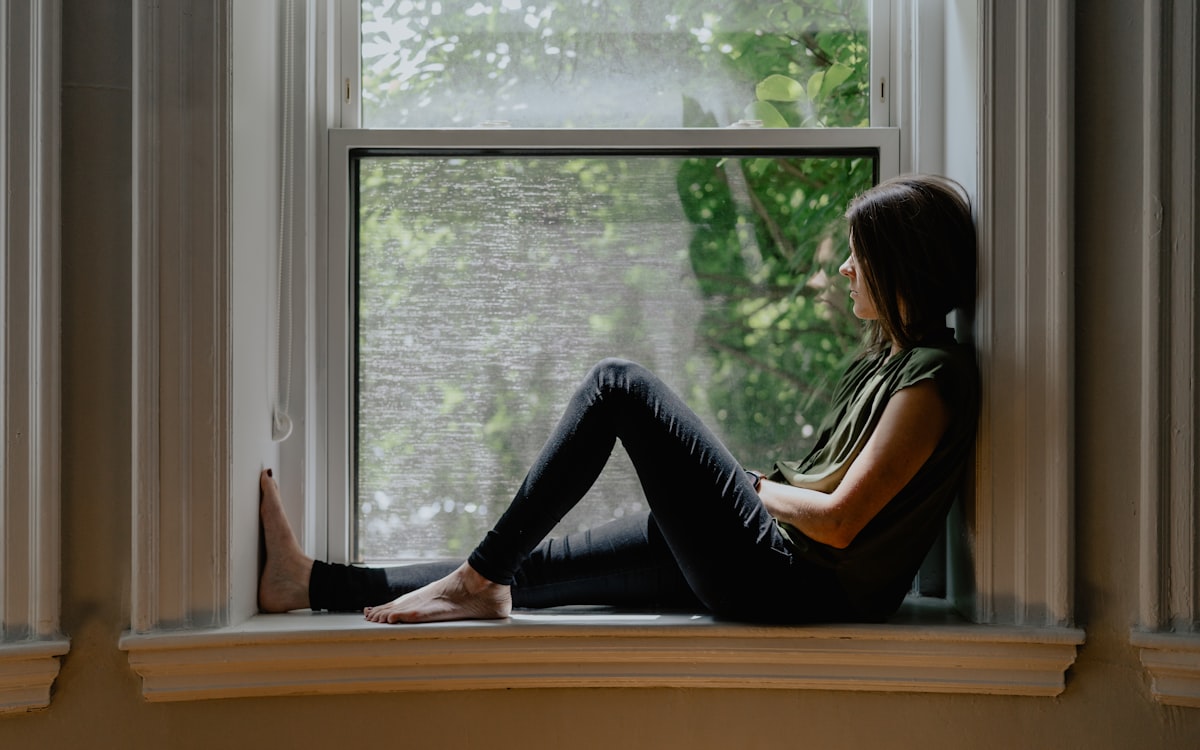
When were you last truly bored? Not the "I've scrolled through everything" kind. The real kind, where you're sitting with nothing to do, nothing to look at, nothing to listen to, and your brain has to entertain itself.
For most of us that experience has become close to extinct. Every micro-moment of potential boredom, waiting in line, riding the bus, eating alone, lying in bed, has been colonized.
Key Takeaways
- The research on boredom and creativity is genuinely mixed, and most articles on this topic tell you otherwise.
- What's better supported: unfilled attention gives ideas somewhere to surface, and walking measurably helps divergent thinking.
- Twenty-minute daily boredom windows produced results for me by day four.
- The first few sessions are physically uncomfortable. That's the cost of entry, not a sign it's failing.
- Ideas that arrive during idle time are qualitatively different from reactions to content.
What the Evidence Actually Shows
Let me start where most articles finish, because this topic attracts more confidence than it deserves.
The study everyone cites is Mann and Cadman at the University of Central Lancashire, which found participants who completed a deliberately boring task first performed better on a subsequent creativity task than a control group. Gasper and Middlewood found something similar for associative thinking.
But a scoping review of research on boredom and creativity found results pointing in both directions. Some studies found state boredom associated with worse performance on divergent thinking tasks, and boredom-proneness associated with less engagement in creative pursuits and lower belief in one's own creative potential.
There are two competing theories behind that split. One treats boredom as an approach-oriented state that pushes people to seek novelty, which supports divergent thinking. The other treats it as a passive state that reduces attention and motivation, which suppresses it.
The honest summary: boredom is not a reliable creativity switch. It appears to depend on what kind of boredom, in what context, and what you do next.
I'm keeping this article because I think the practice is worth doing anyway. But the reason is narrower than "science says boredom makes you creative."
The claim I'd actually defend
You'll also see confident statements that boredom activates the default mode network, your brain's creative engine. The default mode network is real and it is more active during undirected thought. Mapping it onto creativity as cleanly as popular writing does goes beyond what the imaging research supports.
Here's the version that survives scrutiny. Ideas need somewhere to surface. If every gap in your day is filled with input, there is no moment where a half-formed thought can complete itself. That's not a neuroscience claim, it's close to a scheduling one, and it matches what most people report the moment they stop filling the gaps.
Where the evidence is genuinely strong is movement. A Stanford study by Oppezzo and Schwartz found walking increased output on divergent-thinking tasks by around 60%, and got the same result on an indoor treadmill facing a blank wall. So if you want the most reliable version of this practice, walk while you do it.
What Scrolling Displaces
When you're consuming, your brain is processing external input and evaluating it. That's a mode, and it's not a bad one.
The problem is that it's become the only mode. Consumption has expanded to fill every available slot, including the ones where the other mode used to run.
The famous origin stories, Newton's apple, Archimedes in the bath, Einstein at the patent office, are usually oversold as evidence. They're better read as a description of a condition: all of those people had large amounts of unstructured time, which is exactly what we no longer have.
My Two-Week Test
I committed to boredom windows: 20 minutes a day of nothing. No phone, no book, no music, no conversation. Sitting or walking with my own thoughts.
The first few sessions were brutal. My mind raced. I felt physically uncomfortable. I kept thinking of things I could be doing and things I should be checking.
By day four something changed. During a window I got an idea for a project I'd been stuck on for weeks. It arrived essentially complete, like it had been waiting in a back room for the noise to stop.
By week two I looked forward to them. My brain seemed to know idle time was coming and to arrive with threads to work on.
The ideas differed in kind, not just frequency. Scrolling produces reactive thoughts, responses to what you're consuming. Idle time produces generative ones that come out of your own material. The difference is roughly between a karaoke singer and a songwriter.
How to Run a Boredom Window
- Start at ten minutes, not twenty. The discomfort is real and front-loaded.
- Walk if you can, since that's the part with the strongest evidence behind it.
- Leave the phone in another room rather than in your pocket.
- Don't set an intention or a problem to solve. Directed thinking is a different activity.
- Keep paper nearby for afterwards, not during. Writing mid-window turns it back into a task.
- Expect three uncomfortable sessions before anything interesting happens.
Two things that don't count, and I got both wrong initially: podcasts and audiobooks. They feel virtuous, which makes them harder to give up than social media, and they fill the gap just as completely.
The Practical Version
You don't need to be bored all day. You need some unfilled time, and right now most people get none.
Next time you're standing in line and your hand moves toward your pocket, leave it there. Let your mind wander. The thought that surfaces might be the best one you've had all week, but only if there's room for it to arrive.
If you want a ready-made slot, the commute is the easiest one to reclaim.
sources for this page
- Does Being Bored Make Us More Creative?Creativity Research Journal · 2014
- The association between boredom and creativity in educational contexts: A scoping review on research approaches and empirical findingsReview of Education · 2024 · found studies pointing both ways — some showed state boredom associated with worse divergent thinking, not better
- Give Your Ideas Some Legs: The Positive Effect of Walking on Creative ThinkingJournal of Experimental Psychology: Learning, Memory, and Cognition · 2014