Experiment / i-tracked-my-screen-time-for-30-days
I Tracked My Screen Time for 30 Days: Here's What I Learned
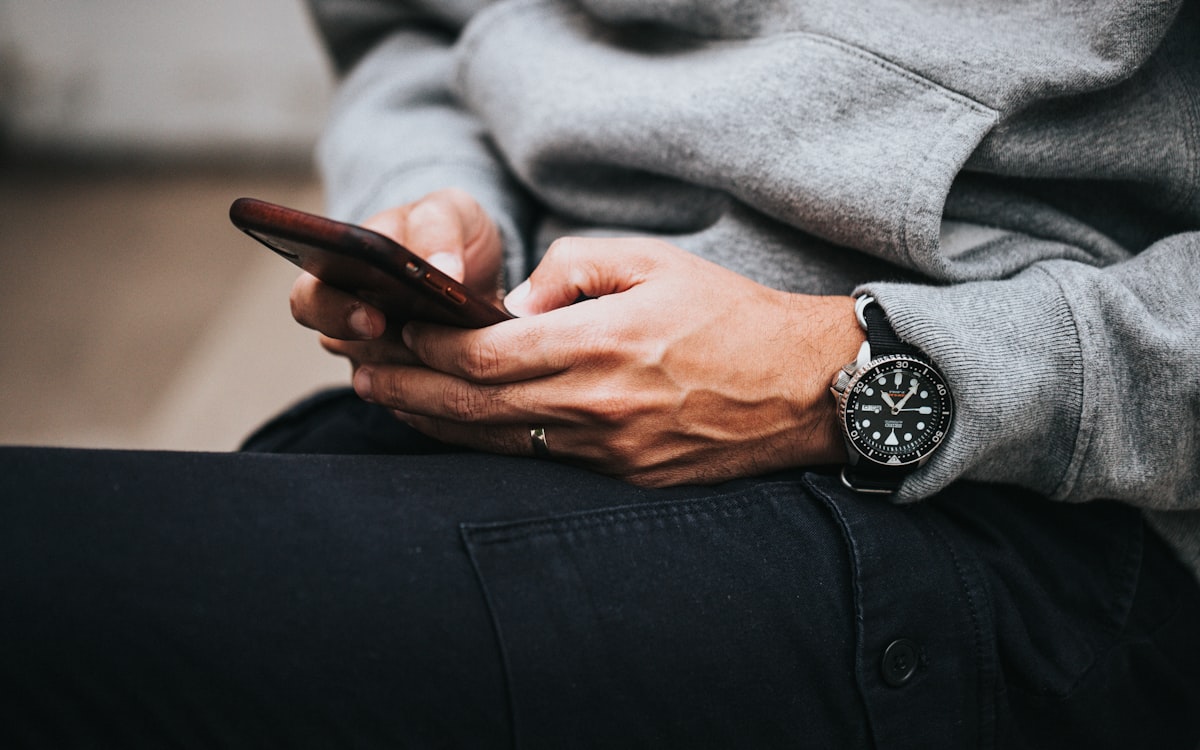
I thought I was pretty good with my phone. I'm not one of those people who scrolls TikTok for three hours straight. I don't even have TikTok. So when I decided to track my screen time for a full month, every single day, no cheating, I expected to feel a little smug about it.
I was wrong.
Key Takeaways
- I started at 4 hours 12 minutes a day and finished the month at 1 hour 45 minutes.
- The problem was never long sessions. It was dozens of two-minute checks, and roughly 70% of mine had no purpose I could name afterward.
- Three windows accounted for almost half my daily total: the minutes after waking, any moment of waiting, and the hour before sleep.
- Moving my charger to the kitchen was the highest-return change I made. The alarm clock that replaced my phone cost six dollars.
- Week one should be observation only. Awareness moved my numbers before I set a single goal.
Day One: The Number I Didn't Believe
I opened my Screen Time report expecting something reassuring. Instead: 4 hours and 12 minutes, 47 pickups, most of it split between Instagram, Chrome, and Messages.
That can't be right, I thought. I barely used my phone today.
It turns out "I barely used my phone today" is a feeling, not a measurement, and the two have almost nothing to do with each other. That gap between what I assumed and what the software recorded is the entire reason this experiment was worth running.
My 47 pickups were on the low end, as it happens. A Reviews.org survey of roughly 1,000 US adults, conducted in the fourth quarter of 2025 with a margin of error around four points, found Americans check their phones an average of 186 times a day, or about 11.6 times per waking hour. The same survey found 45.8% of respondents describe themselves as addicted to their phones, and 53.1% have never gone longer than 24 hours without their device.
So I wasn't unusual. That was the uncomfortable part.
What the Log Actually Revealed
Screen Time gives you totals. Totals are not the interesting part. So for 30 days I kept a paper log next to me and wrote down every pickup and the reason for it.
Three findings came out of that log, and only one of them was about time.
Roughly 70% of pickups had no purpose
I wasn't checking anything specific. I wasn't responding to anyone. I was reaching for it the way you scratch an itch you didn't know you had. When I forced myself to write a reason, most entries ended up as some version of "no reason."
This is why screen time totals mislead people. A single deliberate 40-minute session of reading is not the same as 40 minutes assembled from twenty scattered checks, even though the report shows an identical number.
The damage came from tiny sessions, not big ones
Two minutes here. Five minutes there. A quick check that turns into a ten-minute scroll. My longest single session all month was 22 minutes. My daily total was over four hours. The math only works if the phone is constantly present in small doses, which it was.
Three windows did most of the damage
By week two the pattern was obvious:
- The first 15 to 20 minutes after waking, usually before I got out of bed.
- Any kind of waiting: microwave, elevator, red light, queue.
- The hour before sleep.
Together these accounted for close to half my total. That was genuinely useful, because it meant I didn't need more willpower across the whole day. I needed a plan for three specific windows.
The Uncomfortable Discovery in Week Three
I realized I was using my phone to avoid things. Not big things. Small discomforts. A moment of boredom. An awkward silence. The two seconds between finishing one task and starting another.
My phone had become a bridge over every tiny gap in my day, and somewhere along the way I'd lost the ability to just sit in one. That is a harder problem than screen time, and no app blocker addresses it. If that pattern sounds familiar, the case for being bored is worth reading alongside this.
The Four Changes That Actually Moved the Number
I want to be honest about the ranking here, because most advice lists treat every tip as equally weighted. They aren't. These are ordered by how much they actually did.
1. I moved the charger to the kitchen
This one change cut my morning and nighttime scrolling almost entirely, which is to say it took out two of my three worst windows at once. I bought a cheap alarm clock for six dollars to remove the "but I need it as my alarm" excuse.
If you only do one thing from this article, do this one. The full version of the argument is in why you reach for your phone first thing in the morning.
2. I said the reason out loud before picking it up
Sounds silly. Works anyway. "I'm picking up my phone to check the weather" is fine, and I'd go check the weather. "I'm picking up my phone because..." followed by silence meant I put it back down.
What makes this work isn't discipline, it's latency. It inserts about two seconds between the impulse and the action, and a surprising share of impulses don't survive two seconds.
3. I deleted the Instagram app
Not my account. Just the app. I can still check it on my laptop if I really want to, and it turns out I almost never want to when it requires opening a browser and typing a URL. Friction beats willpower because friction doesn't get tired. There's a longer version of that experiment in what happened when I deleted Instagram.
4. I turned the screen gray
I added this in week three. The effect was smaller than the charger move but real, and it matches the research: a study of 161 undergraduates published in The Social Science Journal found that switching phones to grayscale for eight to ten days cut daily screen time by around 39.7 minutes. Details on setting it up are in the grayscale trick.
Where I Landed After 30 Days
My daily average finished at 1 hour and 45 minutes, down from 4 hours and 12 minutes.
That's not zero, and it shouldn't be. My phone is genuinely useful for maps, music, calls, and messages. Cutting it to zero would be a different kind of failure. But I got roughly two and a half hours back every day, and that time went somewhere: I read four books that month, started walking without earbuds, and had noticeably longer conversations with my partner.
The most surprising result wasn't the number, though. By week four I noticed I could sit in a waiting room without reaching for anything. I could stand in line at the grocery store and just think. That sounds like nothing. If you haven't done it in years, it feels like a superpower.
How to Run This Yourself
Some hard-won process notes, because I got the first week wrong:
- Don't set goals in week one. Observe only. The awareness alone starts changing your behavior, and if you set a target immediately you'll never get a clean baseline to compare against.
- Log the reason, not just the time. Your phone already tracks minutes. It cannot tell you why, and why is where the useful information lives.
- Expect a bad week two. Mine went up briefly once I started paying attention, probably because I was checking the Screen Time report itself.
- Look for your three windows. Everyone has them, and they're rarely the ones you'd guess before measuring.
- Judge the month by what replaced the time, not by the reduction. A smaller number that bought you nothing is not a win.
Be honest with yourself about what you see. The numbers don't lie, even when we wish they did.
sources for this page
- 2026 Cell Phone Usage Stats: Americans Check Phones 186 Times DailyReviews.org · 2026 · ~1,000 US adults, Q4 2025, margin of error ~4 points
- True colors: Grayscale setting reduces screen time in college studentsThe Social Science Journal · 2020 · n=161 undergraduates