Experiment / i-replaced-my-smartphone-with-a-dumb-phone-for-two-weeks
I Replaced My Smartphone with a Dumb Phone for Two Weeks
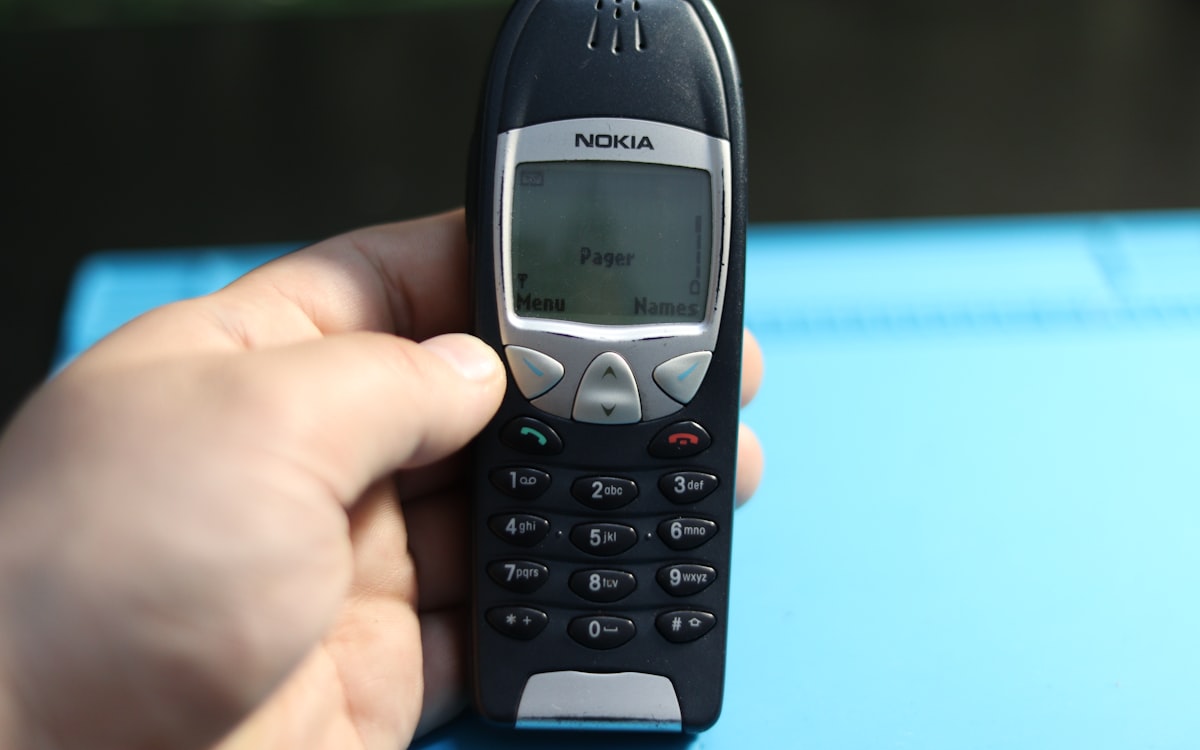
The phone arrived in a small box with almost no packaging. A Nokia 225. Thirty-five dollars. It makes calls, sends texts, and has Snake.
For two weeks my iPhone went in a drawer and this plastic rectangle became my only phone. No apps, no email, no browser, no camera worth mentioning. Texts on a T9 keyboard, which, if you're under 25, means pressing 7 four times to type an S.
Key Takeaways
- What I missed: the camera, maps, and music. What I didn't miss at all: social media.
- Day one was disorienting, day three brought relief, and the relief was about background vigilance rather than time.
- Boredom returned, and with it ideas. I started sketching again after years.
- I wouldn't do it permanently. It still permanently changed how I use my smartphone.
- You don't need to buy anything to get most of the benefit. The experiment is diagnostic, not a lifestyle.
Why I Bothered
I'd been talking about reducing screen time for months. App limits, grayscale, digital detoxes. Everything worked for a while and then I drifted back.
I wanted to know what happened if I removed the option rather than managing it.
Worth noting I'm not alone in trying. Dumb phones remain a rounding error at roughly 2% of the US market, but the Light Phone has passed 100,000 users across three models, and HMD reported its flip phone sales doubled between 2022 and 2023. Surveys put Gen Z and millennial interest in acquiring one meaningfully above the general population. It's a small trend that keeps refusing to disappear.
Day One: Genuinely Disorienting
I left my apartment and immediately felt naked. No maps, no music, no camera, no ability to Google anything.
I got lost driving to a restaurant I'd been to before, because I'd always just followed the directions without learning the route. I had to ask a human being for help, out loud.
The texting was brutal. Messages that took five seconds on an iPhone took a full minute. I stopped texting anything non-essential almost immediately. My group chats went silent on my end.
Nobody noticed.
Day Three: Relief, and What It Was Actually About
By day three the anxiety faded and something unexpected replaced it.
I'd expected to miss content. What I actually got back was mental quiet. Not just the time I'd spent on the phone, but the constant background awareness of it. Is there a notification? Should I check? Did someone message?
That low-level vigilance disappeared, and its absence felt like putting down a backpack I hadn't noticed I was wearing.
This is the part I'd underrate if I hadn't experienced it. Screen time reports measure minutes. They can't measure the ambient monitoring that runs whether or not you're looking at the screen, and in my case the monitoring was the heavier load.
What I Genuinely Missed
- The camera. I have a two-year-old. Not being able to photograph her was a real loss, not a manufactured one.
- Maps. I have a poor sense of direction and I got lost more than I'd like to admit.
- Music. I solved this with a cheap MP3 player, which worked better than expected.
- Two-factor authentication codes, which I'd completely failed to plan for and which nearly ended the experiment on day two.
What I Didn't Miss
- Social media. Not even slightly.
- Email, which was fine handled on a laptop twice a day.
- The news, which did not change because I stopped refreshing it every 20 minutes.
- Being reachable instantly. Nobody needed me urgently who couldn't call or text.
The Boredom Was the Interesting Part
With a smartphone you're never bored. Every gap gets filled. Waiting room, elevator, commercial break, queue.
With the Nokia I was bored constantly. And it was good, in a way I didn't anticipate. My mind wandered and started producing things: ideas, projects I wanted to start, people I wanted to call. I started sketching again after years of not. I came up with a work idea my boss actually used.
There's research pointing this direction. Mann and Cadman at the University of Central Lancashire found participants given a deliberately dull task first went on to produce more creative ideas than a control group.
Being straight about the evidence, though: it's contested. A scoping review of boredom and creativity research found studies pointing both ways, with some showing state boredom associated with worse divergent thinking, not better. The idea that boredom reliably makes you creative is oversold online.
What I'd defend is narrower. When your brain isn't being continuously fed input, it starts generating its own. Whether that counts as measurable creativity in a lab, it's a real difference in the texture of a day, and it's the thing I'd miss most about the two weeks. There's more on this in the art of being bored.
Would I Do It Permanently?
Honestly, no. The camera and maps are too useful and T9 is genuinely painful.
But it permanently changed how I use the iPhone I went back to:
- Only essential apps installed.
- No social media on the phone at all.
- Notifications off for almost everything.
- Maps and camera treated as the reason the device exists.
What the Experiment Actually Taught Me
A phone that makes calls and sends texts is a tool. A smartphone in its default configuration is something else: an entertainment device, a social validation machine, an advertising platform, and an anxiety generator that also happens to make calls.
Seeing those as two different categories of object was worth thirty-five dollars.
You don't have to buy a dumb phone. If you want most of the insight for free, a week without social media gets you a surprising amount of the way there. But if you're curious what life feels like with the digital noise genuinely switched off rather than merely turned down, two weeks with a Nokia might be the most interesting thing you do this year.
sources for this page
- Does Being Bored Make Us More Creative?Creativity Research Journal · 2014
- The association between boredom and creativity in educational contexts: A scoping review on research approaches and empirical findingsReview of Education · 2024 · found studies pointing both ways — some showed state boredom associated with worse divergent thinking, not better