Books on Attention, Phones and Focus

33 books, grouped by the problem they help with. Each one has its central idea on the line, and the ones whose core claims are disputed carry the criticism and a link to it.

Some links on this page earn us a commission if you buy something, at no extra cost to you. It never affects which products we include or what we say about them. As an Amazon Associate we earn from qualifying purchases. More in our privacy policy.

Not sure where to start?

Pick a book in two taps

What's bothering you?
Steps or argument?

Start here

The full list

Change your habits

Books that give you a procedure to follow rather than an argument to agree with.

Digital Minimalism

Cal Newport

A philosophy for technology use where you focus your online time on a small number of carefully selected activities that strongly support things you value.

Less is more: be intentional about which technologies you let into your life.

Summary and evidence check →

Indistractable

Nir Eyal

How to control your attention and choose your life. A practical guide to managing internal triggers and making pacts with yourself.

Distraction is not about the technology. It's about learning to deal with discomfort.

Summary and evidence check →

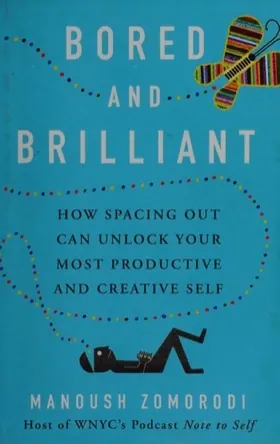
Bored and Brilliant

Manoush Zomorodi

How spacing out can unlock your most productive and creative self. Based on a popular podcast experiment with 20,000 participants.

Boredom is not the enemy. It's the birthplace of your best ideas.

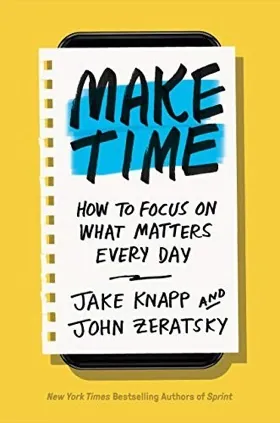
Make Time

Jake Knapp & John Zeratsky

A tactics-first book from two ex-Google designers: pick a daily highlight, then defend it.

Design your day around one thing that matters, not a full inbox.

Why it's so hard

How attention is captured and sold, and why the tips stop working without that picture.

The Shallows

Nicholas Carr

What the internet is doing to our brains. A deep dive into how constant connectivity is reshaping cognition and reducing our capacity for deep thinking.

The internet is literally rewiring our brains to favor skimming over deep reading.

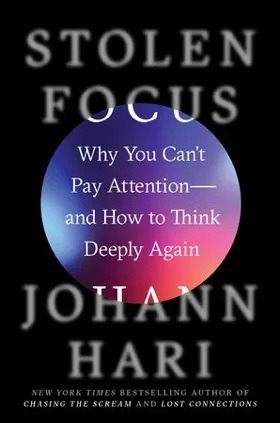
Stolen FocusDebated

Johann Hari

Why you can't pay attention, and how to think deeply again. An investigation into the forces stealing our focus and what we can do to fight back.

Our attention crisis isn't just personal failure. It's systemic, and we need both individual and collective solutions.

Summary and evidence check →

The criticism: The psychologist Stuart Ritchie points out that the book itself concedes there are no long-term studies tracking changes in people's ability to focus, which is the claim its thesis rests on. Stuart Ritchie, UnHerd (2022)

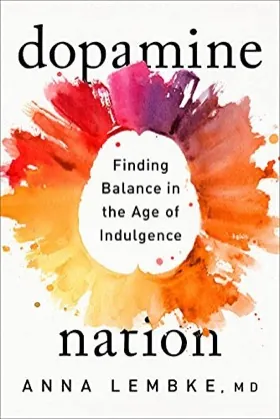
Dopamine Nation

Dr. Anna Lembke

Finding balance in the age of indulgence. A psychiatrist's guide to understanding how dopamine drives addiction and how to restore equilibrium.

Pleasure and pain are processed in the same part of the brain. Too much pleasure leads to pain.

Summary and evidence check →

Irresistible

Adam Alter

How products are engineered to be behaviourally addictive, and why stopping is harder than it looks.

Addiction is designed into products, not a personal failing.

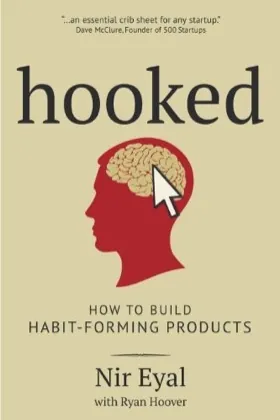
Hooked

Nir Eyal

The Hook Model that product teams use to build habit-forming apps. Read it to recognise what is being done to you.

Trigger, action, variable reward, investment, the loop behind every feed.

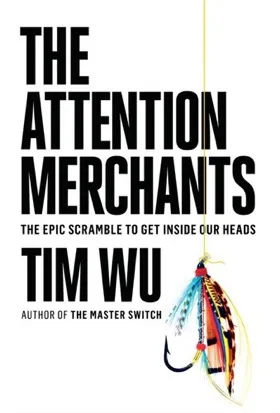
The Attention Merchants

Tim Wu

A history of the industries built on harvesting and reselling human attention, from penny papers to social feeds.

Your attention has been a traded commodity for two centuries.

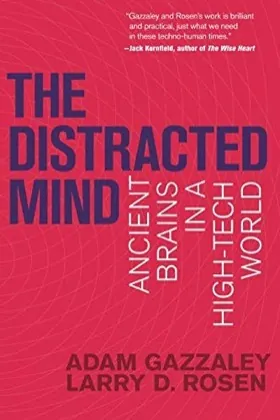
The Distracted Mind

Adam Gazzaley & Larry Rosen

A neuroscientist and a psychologist on why our brains are so poorly built for the interference modern tech creates.

We are information-seeking creatures with weak goal-management systems.

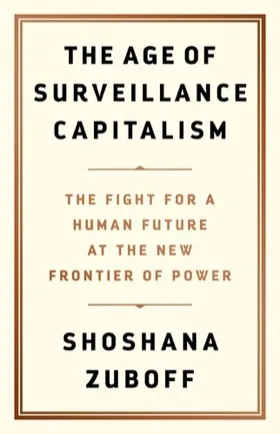
The Age of Surveillance Capitalism

Shoshana Zuboff

The economic logic behind why free products want your behavioural data. Dense, but foundational.

Your behaviour is the raw material, not the product you use.

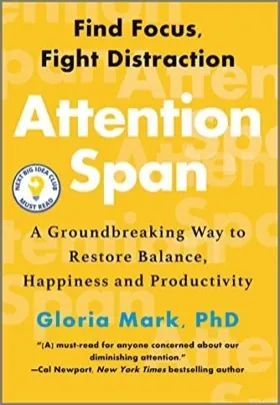
Attention Span

Gloria Mark

Two decades of measuring what people actually do at their screens, from the researcher whose work on interruption is the most cited and the most miscited in the field.

Attention is a finite resource that needs deliberate rhythm, not constant peak focus.

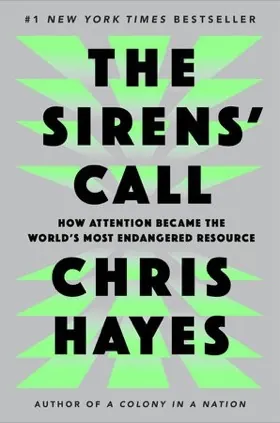
The Sirens' Call

Chris Hayes

An argument that attention has become an extracted commodity in the way labour was in the nineteenth century: harvested at scale by the most valuable companies in history, and increasingly alienated from the people producing it.

Your attention is not being wasted, it is being mined. The distinction changes what a solution looks like.

Summary and evidence check →

Kids and family

The most contested shelf here. Read the influential titles alongside the criticism of them.

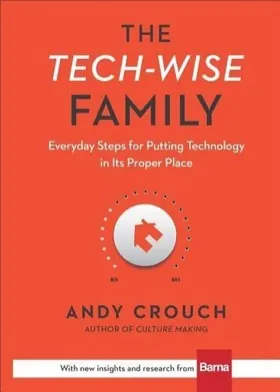
The Tech-Wise Family

Andy Crouch

Everyday steps for putting technology in its proper place. A guide for families who want to be intentional about screens.

The best family tech rules aren't about restriction. They're about creating something better.

The Anxious GenerationDebated

Jonathan Haidt

Argues the rewiring of childhood around smartphones drove a youth mental health crisis, and proposes four norms: no smartphones before high school, no social media before 16, phone-free schools, more independent play.

Play-based childhood gave way to phone-based childhood.

Summary and evidence check →

The criticism: Reviewing it in Nature, the psychologist Candice Odgers argues the evidence it relies on is mostly correlational and does not show that social media caused the rise in adolescent mental illness. Candice Odgers, Nature (2024)
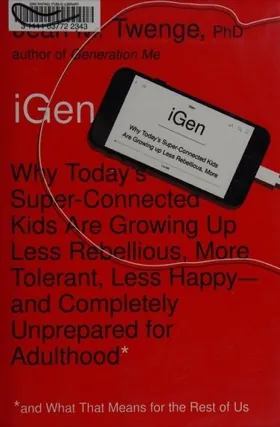
iGenDebated

Jean M. Twenge

Generational data on how smartphone adoption tracked with changes in teen wellbeing, sleep and socialising.

The shift shows up sharply around 2012, when smartphones hit saturation.

The criticism: Re-analysing three large adolescent datasets, Amy Orben and Andrew Przybylski found digital technology use explained at most 0.4% of the variation in wellbeing: a negative association, but a very small one. Orben & Przybylski, Nature Human Behaviour (2019)

Glow KidsDebated

Nicholas Kardaras

A clinician’s alarm about screen effects on children, drawn from his work treating teenagers for technology addiction.

Kardaras argues heavy screen use acts on a child's brain the way addictive drugs do.

The criticism: The research psychologist Peter Gray argues the book's comparison of screens to hard drugs misreads the dopamine research: gaming raises dopamine about as much as eating pizza does, far less than cocaine or heroin. Peter Gray, Psychology Today (2018)

The Art of Screen Time

Anya Kamenetz

A deliberately unpanicked look at family screen use, built on a riff on Michael Pollan's food rules: enjoy screens, not too much, mostly with others. Kamenetz reads the actual evidence rather than the headlines about it.

Most screen-time advice is stated with far more confidence than the underlying research supports. Co-viewing beats counting minutes.

Growing Up in Public

Devorah Heitner

On what it does to a childhood to have it documented, shared and searchable, by peers, by schools, and often by parents. Heitner has a PhD in media and society and writes about tweens and teens without condescending to them.

Surveillance is not the same as guidance, and monitoring software teaches concealment more reliably than judgement.

The Opt-Out Family

Erin Loechner

Written by a former influencer who walked away from a million followers. Takes aim at the algorithms rather than at screen limits, which makes it more practical than the usual tech-free-household memoir.

Parental control apps manage symptoms. Understanding what the feed is optimising for is the part that transfers to your kids.

Focus and work

For when the problem is concentration itself rather than the phone.

Deep Work

Cal Newport

Rules for focused success in a distracted world. Learn how to cultivate deep concentration to produce meaningful work.

The ability to focus without distraction is becoming increasingly rare and increasingly valuable.

Summary and evidence check →

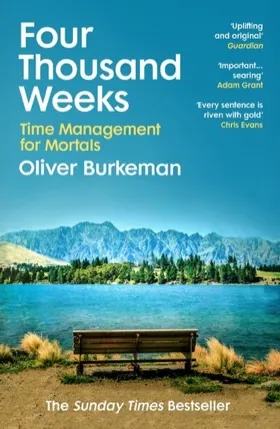
Four Thousand Weeks

Oliver Burkeman

Time management for mortals. A corrective to productivity culture that reframes what focus is even for.

You will never get on top of everything: choose what to neglect.

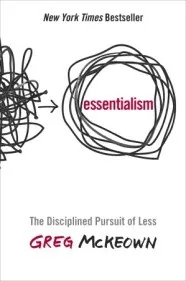
Essentialism

Greg McKeown

The disciplined pursuit of less. A framework for deciding what deserves your attention at all.

If it is not a clear yes, it is a clear no.

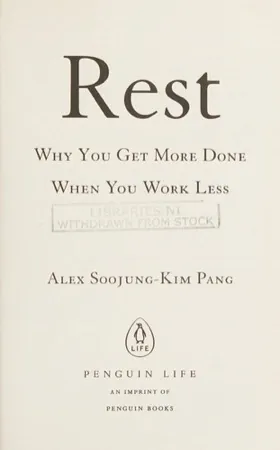
Rest

Alex Soojung-Kim Pang

Why deliberate rest is not the opposite of work but part of doing it well.

Deliberate rest is a skill, and it is what makes deep focus sustainable.

Connection and culture

What constant connection does to conversation, solitude and taste.

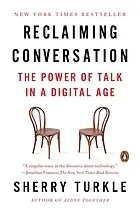
Reclaiming Conversation

Sherry Turkle

The power of talk in a digital age. Why face-to-face conversation matters more than ever and how to bring it back.

We've sacrificed conversation for mere connection, and it's eroding our capacity for empathy.

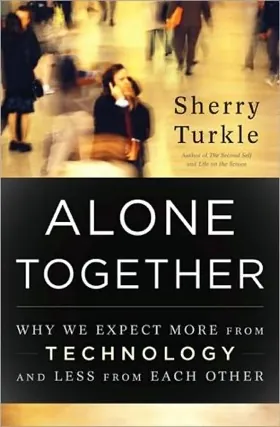
Alone Together

Sherry Turkle

Why we expect more from technology and less from each other. The book that preceded Reclaiming Conversation.

Constant connection can crowd out real solitude and real intimacy.

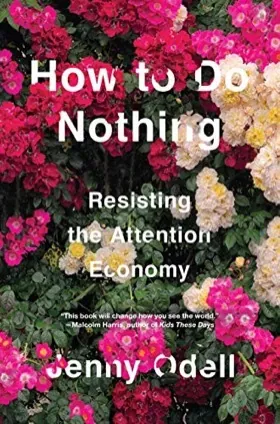
How to Do Nothing

Jenny Odell

An argument for attention as a political and ecological act, not a productivity hack.

Resisting the attention economy is about what you give attention to, not just less screen time.

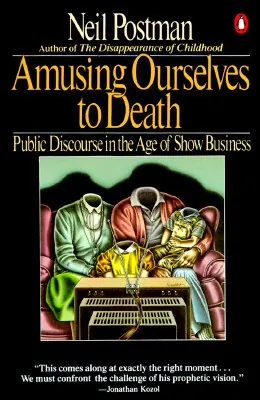
Amusing Ourselves to Death

Neil Postman

Written in 1985 about television, and uncomfortably accurate about everything since.

The medium shapes what a culture is able to think about.

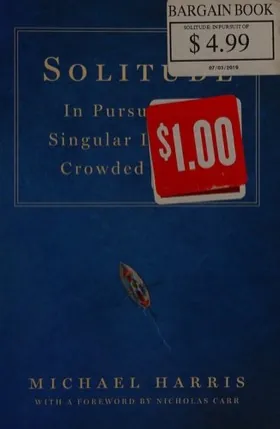
Solitude

Michael Harris

What we lose when we are never alone with our own thoughts, and how to get it back.

Solitude is a capacity that atrophies without practice.

Filterworld

Kyle Chayka

A New Yorker staff writer on how algorithmic recommendation has flattened culture: coffee shops, playlists, city blocks and feeds converging on the same texture because the same systems are choosing what surfaces.

The cost of algorithmic curation is not only your time. It is the narrowing of what you ever get offered in the first place.

Where to start, depending on the problem

The list is not ranked, because the right first book depends on what is actually bothering you rather than on which is best in the abstract.

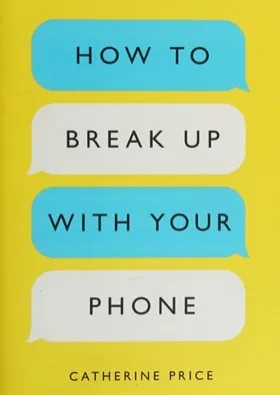
  • If you want a method. How to Break Up with Your Phone is the most procedural: a 30-day plan with one change a day. Digital Minimalism makes the longer case and ends in its own 30-day declutter. Read one, not both back to back; they overlap.
  • If you want the mechanism. Hooked is the product-design manual for habit-forming apps, written for the people building them, which makes it a clear view of what is being done to you. Irresistible covers the same ground from the user's side, and The Attention Merchants gives it a two-century history. Understanding variable rewards is what makes the friction tools make sense.
  • If the concern is a child. Start with The Art of Screen Time, which is careful about the evidence, before The Anxious Generation, which is influential and contested. Growing Up in Public is the one to read if the question is monitoring rather than minutes.
  • If the problem is focus rather than the phone. Deep Work for the method, Four Thousand Weeks for the corrective to it. If nothing specific is eating your time and you simply cannot settle, no blocker will fix that.

On the contested ones

Four books here carry a Debated note: The Anxious Generation, iGen, Glow Kids and Stolen Focus. That is deliberate rather than fence-sitting. Each makes a strong claim that researchers who have read the same data dispute in print, and each note links to that criticism so you can judge it yourself. A book that reads as settled science is usually ahead of what the studies support.

Where a claim from any of these is worth checking against the primary research, the evidence reviews take several of the most-quoted ones apart.