How-To / phone-free-bedroom-how-to-make-it-work
How to Make a Phone-Free Bedroom Actually Work
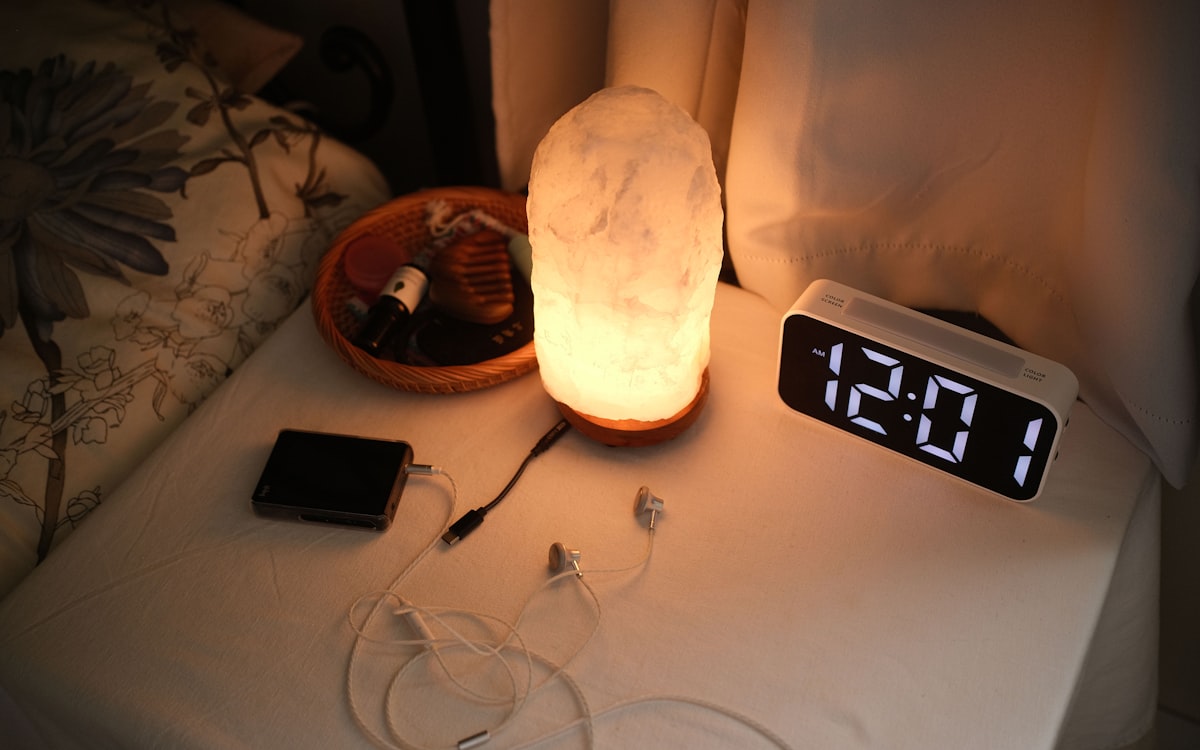
"Keep your phone out of the bedroom" is the single most repeated piece of advice in this entire subject, and the least usefully explained. The obstacles are practical, and nobody addresses them.
Here is the version that survives contact with real life.
Why the bedroom specifically
A nationally representative study of US young adults published in SLEEP found bedtime social media use associated with disturbed sleep.
It is an association rather than proof of cause, but it is consistent across a lot of the literature. And there is a mechanism that doesn't depend on the research at all: a phone within arm's reach turns every ordinary night waking into a checking opportunity.
The interesting part is that this doesn't appear to be mainly about blue light. What you are doing on the screen seems to matter more than the light coming off it, which is why filters and night modes alone tend to disappoint people who try them as a single fix.
The alarm clock objection
This is the reason most people give for keeping the phone by the bed, and it has a six-dollar solution.
Buy a basic alarm clock. Not a smart display, not a device with a screen bright enough to read by — a cheap clock with a dim face. This is genuinely the whole answer, and it is the step most people skip.
The emergency objection
This one is legitimate and deserves a real answer rather than dismissal.
On both iPhone and Android you can allow calls through while everything else stays silent:
- **iPhone** — Settings, then Focus, then Sleep. Under People, allow calls from Favourites, and switch on Allow Repeated Calls so a second call within three minutes rings through.
- **Android** — Settings, then Digital Wellbeing, then Bedtime mode, and pair it with Do Not Disturb configured to allow starred contacts and repeat callers.
Set that up and the phone can sit in the hallway, still audible for a genuine emergency, without being available for a 2 a.m. scroll.
If you are a carer, on call for work, or have a specific reason to need the phone reachable, put it across the room rather than in another room. Distance is the active ingredient, not absence.
Where to actually put it
The charger goes where you would have to stand up and walk to reach it. The kitchen is ideal. The hallway works. A drawer on the far side of the bedroom is the weakest version but still much better than the bedside table.
Move the charger, not just the phone. If the cable is still by the bed, the phone comes back within a week.
The first week
Expect three uncomfortable nights. The discomfort is not about the phone — it is that you have removed the thing you used to avoid lying awake with your own thoughts.
Two things help:
- Put a book on the bedside table where the phone used to be. Physical, not an e-reader with a browser on it.
- Keep a notepad there too. Most late-night phone reaching is an attempt to deal with a thought — a reminder, a worry, a thing to look up. Writing it down discharges it.
What tends to change
Most people report falling asleep faster within about a week, and waking up differently — the morning starts with whatever you choose rather than whatever arrived overnight.
The one that surprises people is the middle of the night. Waking briefly is normal and most people don't remember it. Waking and checking a phone turns a two-minute event into a thirty-minute one.
If it doesn't work
If you have done all of this and still sleep badly, the phone was probably not the main problem. Persistent insomnia has plenty of causes that no amount of screen hygiene will fix, and it is worth talking to a doctor rather than escalating the digital-minimalism measures.
sources for this page
- Social Media Use Before Bed and Sleep Disturbance Among Young Adults in the United States: A Nationally Representative StudySleep · 2017 · An association, not proof of cause — though consistent across much of the literature.